
How to Search Civil Dockets
Civil cases in Sumter Superior and State Court run through Georgia E-Access to PeachCourt. The live search page requires an account, and non-attorneys can register. Have the court name ready along with the party name or action number. Superior and State Court share one Clerk of Superior / State Court. Even so, results from one court never substitute for the other, so confirm which court your case belongs to before you search.
- Read the caption and identify Superior, State, Magistrate, Probate, or Juvenile Court.
- For Superior or State Court, follow Georgia E-Access to PeachCourt and sign in.
- Select Sumter County and the named court, then search by exact action number when possible.
- Compare parties, cause, filing date, service, settings, and disposition.
- Order the exact pleading, order, or certified judgment from the proper custodian.
You can reach the Clerk of Superior / State Court several ways. Call 229-928-4537. Visit the counter at 500 West Lamar Street. You can also mail PO Box 333, Americus, GA 31709. Hours run Monday through Friday, 9:00 a.m. to 5:00 p.m. For a docket request, give the court, the action number, party names, the document, and a date range. Magistrate, Probate, Juvenile, and municipal cases each go to their separate offices.
Sumter Civil Filing Costs
The Sumter Clerk FAQ publishes filing, copy, and certification information.
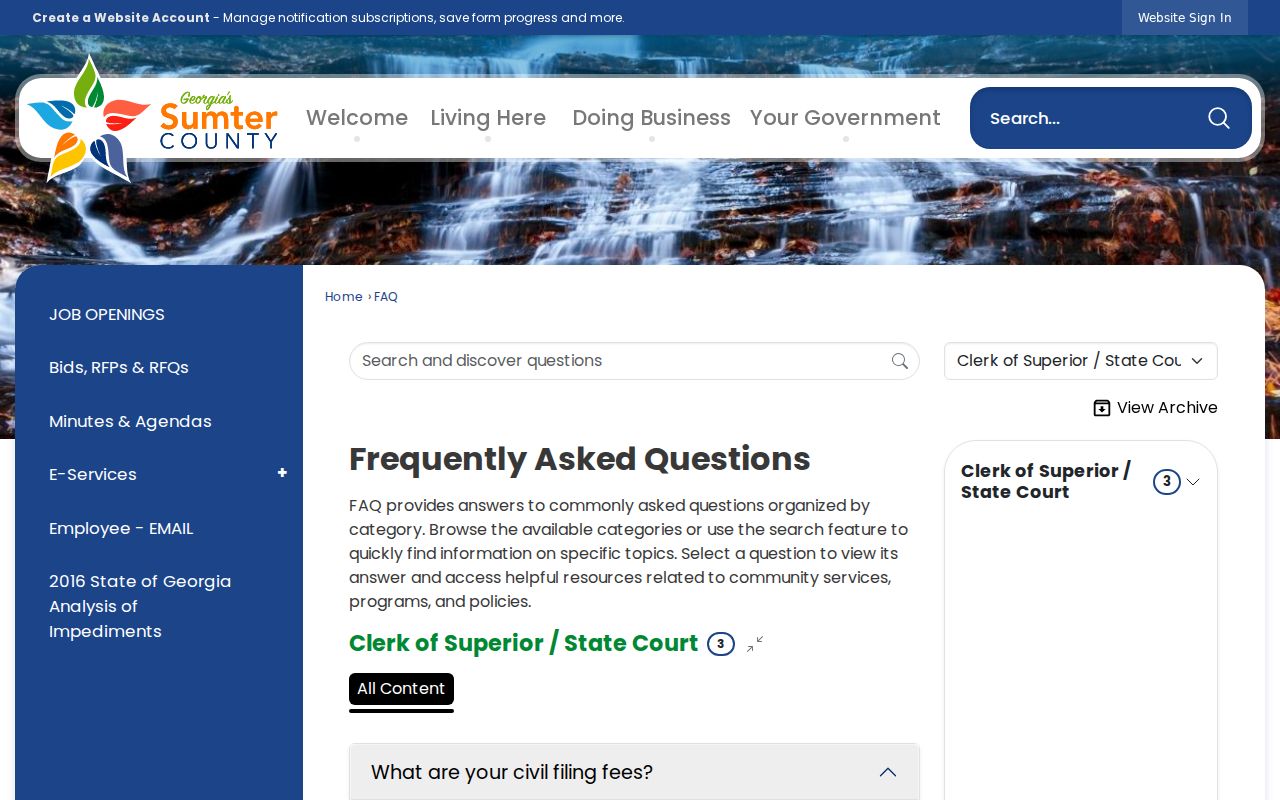
The FAQ lists a $209 civil filing fee for both Superior and State Court. That base figure does not cover every service or special proceeding, since copies, certification, service, and similar work can add charges of their own. Confirm the current total before you file or send payment.
The fee prices filing work only, not a docket search. It also says nothing about jurisdiction. Venue, claim type, and requested service must be settled first.
What a Civil Docket Shows
Georgia Uniform Superior Court Rule 39.2 offers the clearest official model of what a docket should hold. A Sumter County civil docket may record the action number, cause, attorneys, parties, filing date, costs, service, disposition, judgment, trial facts, judge, Fi.Fa. issuance, and links to minutes or a final record. A vendor screen can show less than that.
| Action number | Connects filings and events within one Sumter civil case. |
|---|---|
| Cause and parties | Identify the action type and formal roles, not who is right. |
| Filing and service | Keep the document-filed date distinct from formal delivery of process. |
| Settings and trial | May show hearing or trial dates and jury or non-jury status. |
| Disposition and judgment | Record case results, dates, verdicts, orders, or dismissals. |
| Fi.Fa. and references | May note judgment-execution records and cross-references to final records. |
"Not displayed" does not mean "not applicable." A field may sit with the clerk, fall outside online coverage, or be restricted from view. A filed complaint is only an allegation. A filing date is not a decision date, and a judgment does not finish every later enforcement issue.
Sumter Civil Court Choices
The GSCCCA Sumter clerk profile names Cortisa E. Barthell.
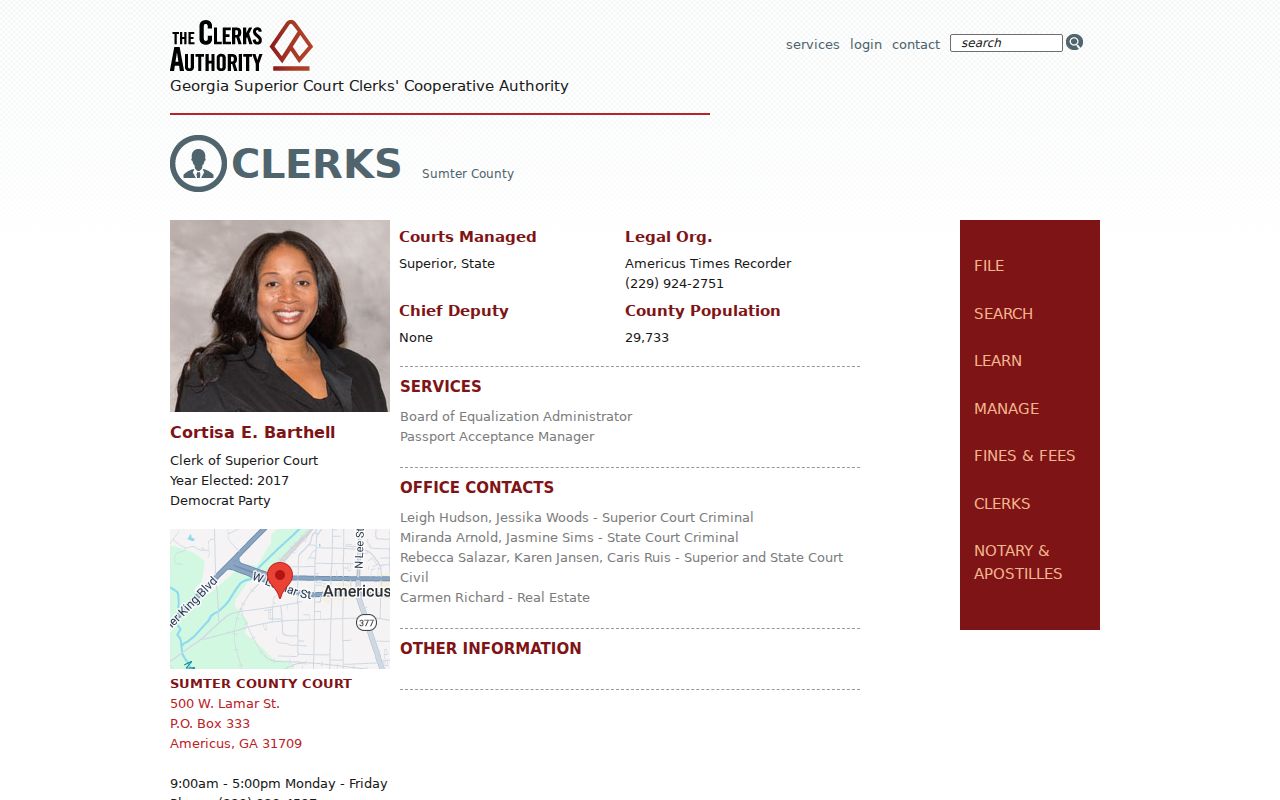
One elected clerk can keep records for several courts at once without merging their jurisdiction or case indexes, and the profile makes that distinction plain.
Superior Court is Georgia's general-jurisdiction trial court, handling broad civil and domestic-relations work. Sumter State Court holds limited jurisdiction instead. Magistrate Court covers claims within its authority, garnishments, dispossessory matters, foreclosures, and related work. Probate and Juvenile Courts keep their own subject-specific files. For routing proof, the caption or filing receipt beats guesswork every time.
Types of Civil Cases on the Docket
Sumter County civil dockets cover a wide range of disputes and petitions. The right court turns on the relief sought and the subject, not merely on a matter being "civil." Common categories include:
- contract, debt, tort, and property actions within the chosen court’s authority;
- domestic-relations matters such as divorce, custody, or legitimation in Superior Court;
- Magistrate claims, garnishments, and dispossessory proceedings;
- probate, estate, guardianship, and conservatorship matters kept by Probate Court; and
- juvenile or DFCS-related matters subject to their own venue and access rules.
Sumter County has no separate county "family court." Local guidance places legitimation in Superior Court unless a DFCS matter is pending. Guardianship normally routes to Probate. Contested guardianship issues can reach Juvenile Court, though. Custody generally belongs in Superior Court unless DFCS involvement changes the route.
Sumter Magistrate Civil Route
The Georgia Magistrate Council forms directory shows the proceeding types available statewide.
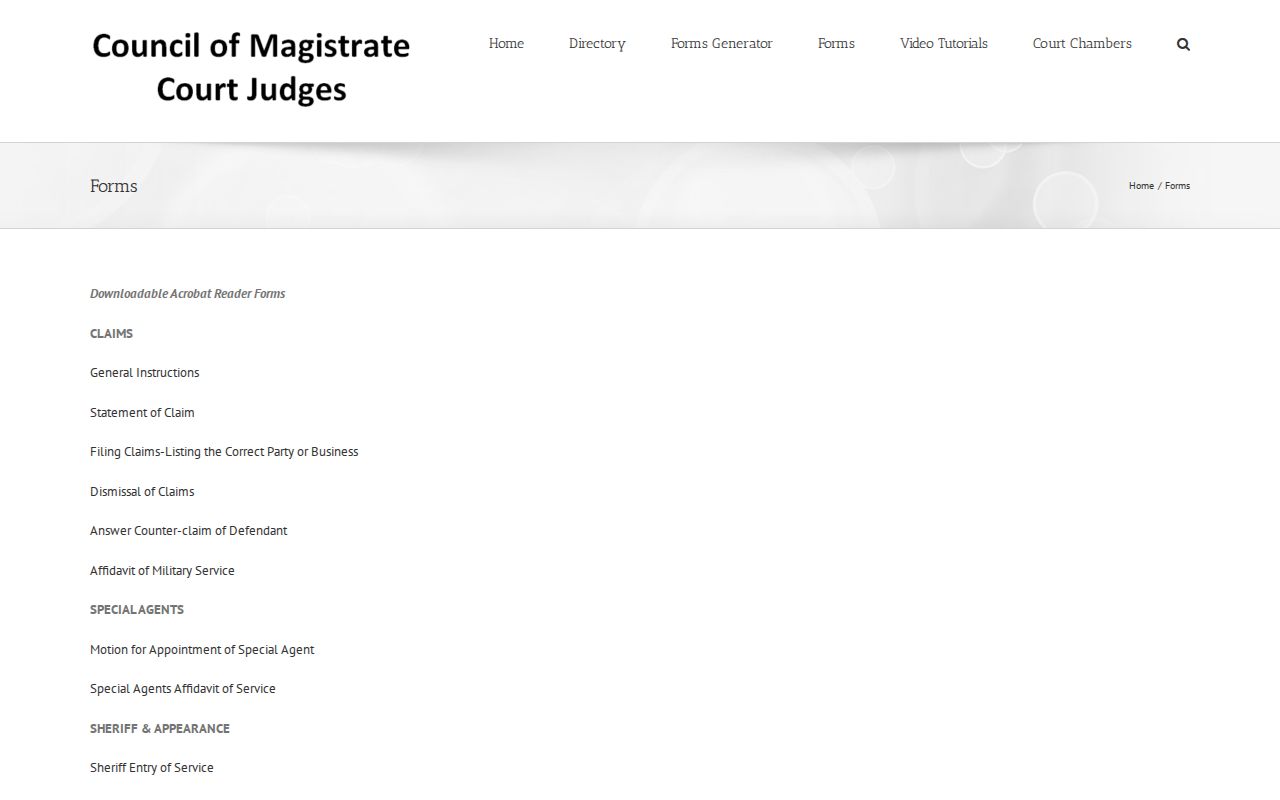
The forms view helps a reader spot a claim, garnishment, dispossessory, foreclosure, or other Magistrate process. A form library is not a Sumter case search, though.
The Sumter Magistrate Court page lists a civil ceiling of $15,000. It also links to forms and e-filing. A Magistrate action will not appear just because you choose Superior Court in PeachCourt. When the paperwork names Magistrate, contact that office directly. Confirm filing terms and access locally, since a statewide form does not show the current local docket.
Settings and Hearings on Civil Dockets
A civil setting is a scheduled event, not a result. The docket may list a motion hearing, status conference, pretrial proceeding, or trial. Rule 39.2 treats trial date, jury status, judge, and disposition as separate facts. Read a changed date through the newest entry plus any filed scheduling order or notice.
Service shapes when a case is ready to move. The filing date shows when a paper arrived. The service date marks formal delivery under the applicable process. A reset or continuance can replace a prior setting without dismissing the action. When attendance is required, confirm time, location, and status with the Sumter County court calendar resources and the clerk.
Sumter Civil Copies and Certification
The Georgia eCertification portal supports requests and authentication for participating counties.
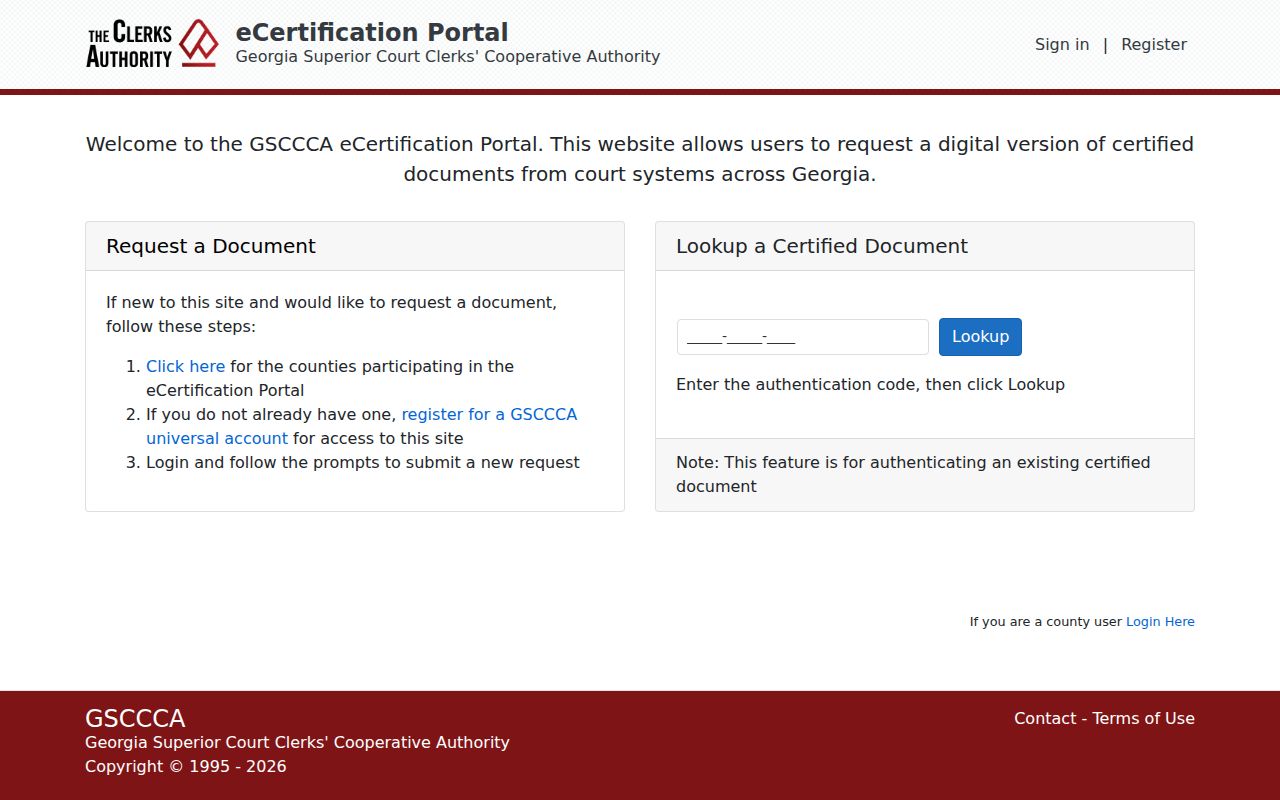
Sumter County gives you two ways to get certified civil paperwork. The state portal can issue certified documents. The Sumter clerk still decides what the record is and who may lawfully see it. Pick the county on the portal. Give enough case detail that the clerk can pinpoint the exact pleading or order.
Need a certified complaint or judgment? Use the action number, the document's exact title, and its filing date. Ask whether electronic certification is offered for that item. A plain portal printout is never a certified copy. A docket row alone may also lack the full document. If an image is missing or a filing name is unclear, don't give up. Phone, mail, and counter requests still work well.
Public Access to Civil Dockets
Georgia Uniform Superior Court Rule 21 opens with a simple promise. Court records sit open to the public. That access still bends to statutes, court orders, and redaction rules. Rule 36.17 limits protected identifiers in filings. Some material gets different handling, including family, adoption, and juvenile files, sealed matters, and confidential exhibits. One caution for any Sumter County docket search. If a document image is missing, that alone does not mean the whole case is sealed.
Key rules:
Uniform Superior Court Rule 21 states the access presumption and standard for limiting court records.
Uniform Superior Court Rule 36.17 requires shortened personal and financial identifiers.
Georgia Open Records Act guidance explains narrow requests, response timing, reasonable fees, and exemption citations.
Ask the court clerk who holds the file, not a general county office. Be specific about the case you want. Ask whether the clerk can send it electronically. If staff deny your request, ask them to state the legal basis in writing or by citation. Never hand over a full Social Security number, full birth date, or account number as a search key. The clerk does not need them for a case lookup.
Sumter Civil E-Filing Boundary
The eFile Georgia route is linked for Georgia Magistrate filing activity.
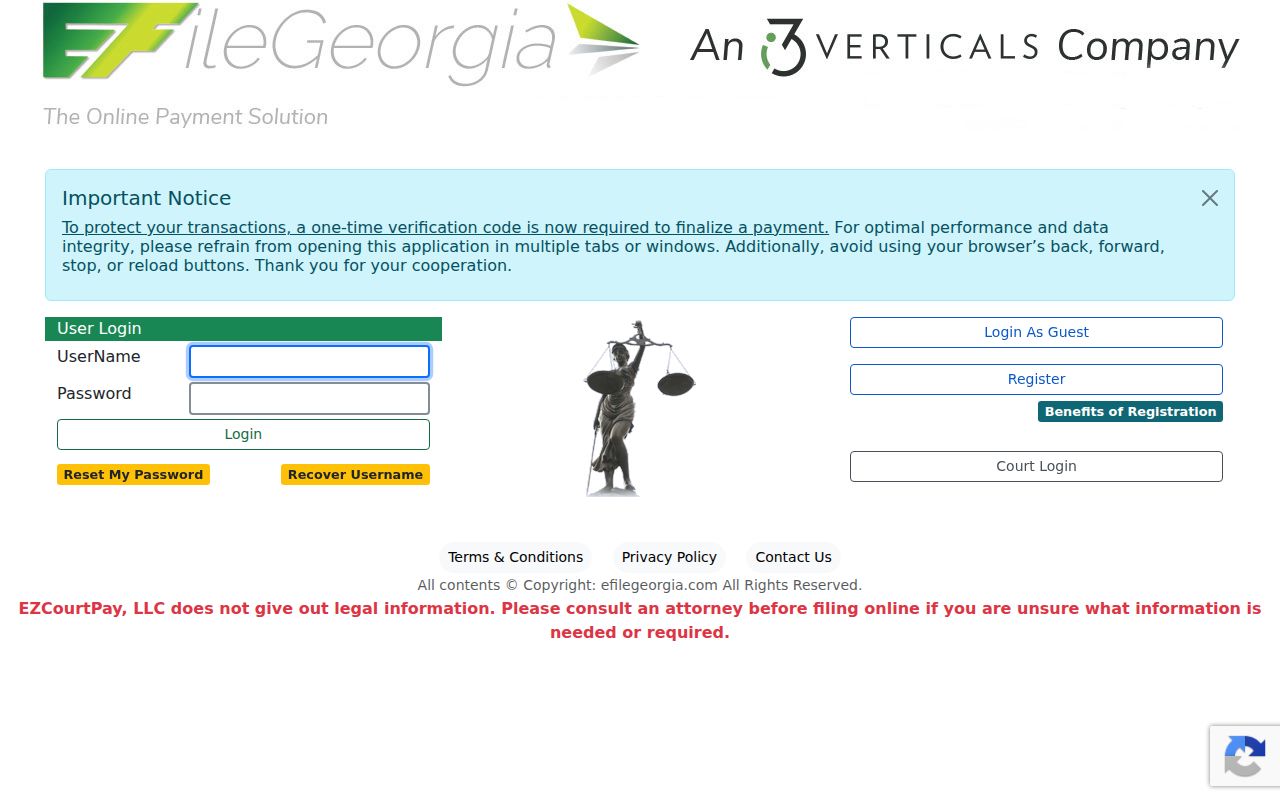
The screen shows a boundary worth knowing. E-filing sends a pleading to a court. It is not docket search. It is not a pass to any document you like.
Georgia's e-file map lists PeachCourt as mandatory. This applies to the stated Sumter Superior and State Court categories. The Sumter Magistrate page, in turn, points to eFile Georgia. Match the system to the named court. For an existing file, run a case lookup. You can also contact the office that keeps the record. For a new filing, follow the court's current instructions and confirm fees. Keep in mind that UCC filings, real-estate records, trade names, and liens are clerk records, not civil case dockets. The same office may handle them anyway.
Does a civil name search come up empty? Check the action number, the court, the date range, and the spelling. Then try Magistrate, Probate, Juvenile, or a city office as the facts require. Ask the clerk whether an older file or a non-displayed image exists. A miss on one provider only means more routing work. It does not mean no civil matter exists.