
How to Search the Plains Court Docket
Start with the court named on the citation. A city citation belongs at Plains City Hall, with the municipal court clerk. The official city payment page links out to PayGov. That vendor shows no anonymous docket results, no case table, and no public calendar. Cases captioned for Superior or State Court run on a different track. For those, use Georgia E-Access and the Sumter PeachCourt provider.
- Read the Plains court name, citation or case number, alleged violation, and appearance date.
- For a Plains municipal matter, contact Plains City Hall and use the official payment link only when payment is the chosen response.
- Ask the Plains clerk to confirm the current setting, balance, status, or copy procedure.
- If the document names Sumter Superior or State Court, search that exact court through PeachCourt.
- Keep payment confirmation separate from the official disposition or certified record.
Plains City Hall sits at 101 West Church Street, Plains, Georgia 31780. Mailed requests go to PO Box 190, Plains, GA 31780. The listed phone is 229-824-5445 and the fax is 229-824-5262. The payment screen cannot answer every question about a case, a setting, or a final result. These local channels are the fallback.
Plains Court Docket Payment Portal
The official Plains citation page supplies Plains’s Pay Now route.
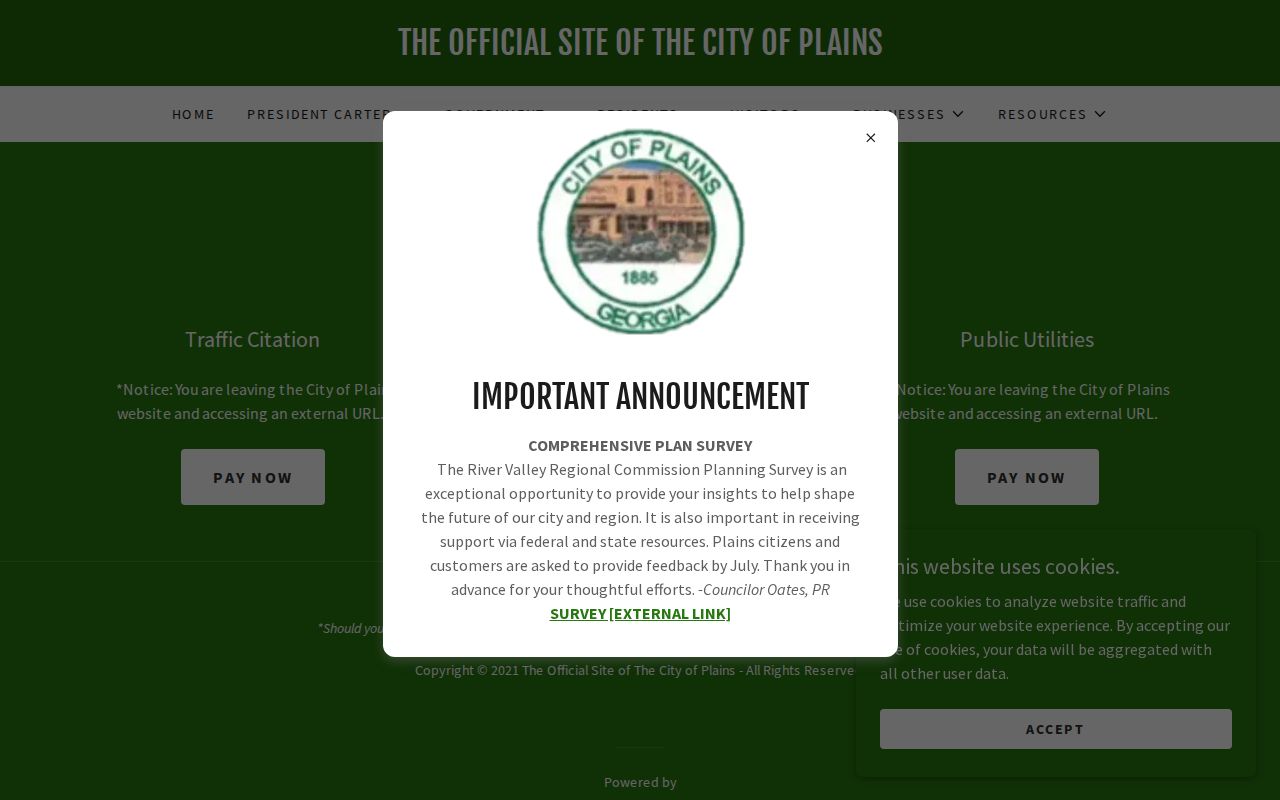
The official Plains page offers a payment channel and nothing more. It shows no Plains court docket. It shows no case history, no hearing calendar, and no certified disposition.
The link passes you to PayGov. That vendor asks for a location code. Or it lets you pick a state, a jurisdiction, and a transaction type. PayGov also states plainly that it is not owned or operated by a government entity. Convenience fees apply, it says. Enter through the official Plains page so the jurisdiction is never guessed.
The Plains Municipal Court
The city departments page lists a municipal court clerk and Judge Michael Fennessy in public office roles. Municipal Court is the local contact for any citation or ordinance matter naming Plains. Its clerk can explain the lawful access path. The clerk can confirm a setting and say whether a certified record can be supplied.
Plains publishes no searchable municipal docket table. No public fine schedule appears either. That gap matters. PayGov cannot fill it. The vendor exists to take a transaction, not to explain proceedings or certify what the Plains court decided.
Plains Court Docket by Population
The official 2020 Census incorporated-place table ranks Plains within Sumter County.
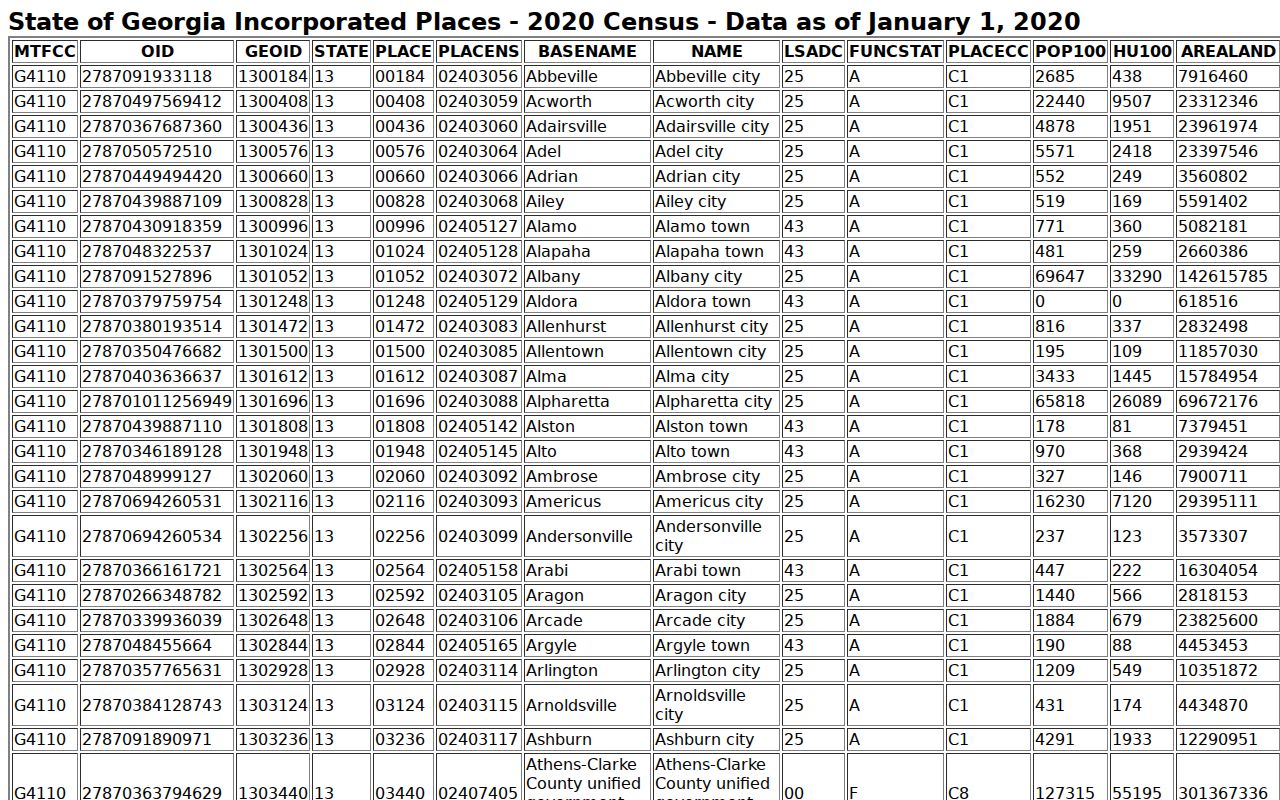
The table reports 573 Plains residents in 2020. That is historic population context, not a current caseload count or a list of parties.
Small scale does not fold Plains court into the county system. A local citation can still carry its own clerk, its own setting, its own payment path, and its own record. Routing matters here precisely because a statewide search may never index the municipal matter.
Plains Court Dates and Settings
The appearance date printed on the citation is the first place to look. A continuance, notice, or delay may have intervened. Call the Plains municipal clerk before relying on it. PayGov exposes no public calendar. And a successful transaction proves neither that an appearance was canceled nor that every obligation is complete.
| Date | The appearance or hearing date printed on the citation or confirmed by the Plains clerk. |
|---|---|
| Time | The listed report time, which may differ from when an individual matter is called. |
| Location | The place named on the Plains citation or later court notice. |
| Judge | The presiding official; Plains lists Judge Michael Fennessy. |
| Setting type | An appearance, plea, trial, compliance event, or other municipal proceeding. |
A date can change while the case lives on. Keep the newest notice and ask the Plains clerk to state the current setting. When the paperwork names a county court, follow that court's calendar rather than the Plains payment page.
Missing Plains Court Docket Citation
Georgia Courts warns that citation information can take 7 to 21 business days to reach the appropriate court. A fresh ticket missing from a search may still be moving through that handoff. Double-check the Plains court name and citation number, then call Plains instead of repeating searches with altered personal details.
If PayGov cannot locate the transaction: do not assume the citation was dismissed. Confirm that Plains is the issuing jurisdiction, allow for the state’s posting window, and ask Plains City Hall for the status and correct payment or appearance route.
A vendor error and a court disposition are different facts. Save the citation and note when the Plains clerk was contacted. Never submit a full Social Security number or a financial account number just to search a docket.
Plains Traffic Tickets
A citation naming Plains Municipal Court belongs on the Plains route. The official page permits a PayGov handoff, though it publishes no official docket fields. Read the ticket before you pay or appear. Check the alleged violation, the citation number, the appearance instructions, and the due date.
Paying can carry legal consequences and may be treated differently from a contested appearance. No current Plains fine schedule or full local explanation of plea options appears publicly. Ask the municipal court clerk for the amount and the procedure. A county traffic citation belongs with the Sumter Clerk of Superior / State Court. That office expressly excludes city offenses. For the county-wide distinction, see Sumter County traffic court records.
Plains Court Docket Payment Proof
A receipt only proves money moved. It is not a certified disposition. The Plains court docket may list the charge, the plea, the court event, the disposition, and the date as separate entries. So payment and outcome sit in different places. When you need the formal result, request the exact record from the Plains municipal clerk. Allow posting time before you expect it.
Hang onto the confirmation number, date, amount, and payment method. Ask the clerk whether a court appearance or compliance step is still open. If the copy must be certified, say so up front. Plains, not PayGov, controls the official Plains municipal record. It can tell you whether a certified copy exists.
Where Plains Cases End Up
Not every case that starts in Plains stays there. Plains Municipal Court hears the matters assigned to the city level, but a caption reading Superior or State Court goes down the Sumter County path instead, even when the underlying event happened in Plains. Felonies land in Superior Court. The State Court runs its own limited-jurisdiction docket, and one office, the Clerk of Superior / State Court, keeps the files for both courts.
Docket flow: Plains Municipal Court › Sumter County Courts › Superior Court of Georgia, Southwestern Judicial Circuit, Sumter County
This is a search escalation, not an automatic transfer of every matter. Read the court named on your paperwork first. When a citation or case has moved past city altitude, the Sumter County court docket overview lays out the county offices you need.
Plains Court Docket Office Roles
- Municipal court clerk
- The local custodian and operational contact for the Plains municipal record.
- Judge
- The judicial officer who hears and decides matters within the Plains court’s authority.
- Payment vendor
- A private transaction service; it is not the Plains court or official record keeper.
- Disposition
- The formal result entered for a charge or case.
- Certified copy
- A copy authenticated by the official custodian.
Keeping these roles straight keeps a payment page from being mistaken for a court docket. The Plains clerk answers questions about settings and records, while the judge performs the Plains court's judicial work. PayGov simply processes whatever transaction you choose.
Public Access to Plains Court Records
Georgia law leans toward public access. Though what you can get depends on the record type, any redactions, and lawful restrictions. Send the Plains municipal custodian a narrow request. Include the citation or case number, the record title, and a date range. Ask for electronic delivery if it exists. If anything gets withheld, request the legal basis in writing.
Key rules:
Georgia Open Records Act guidance describes the general three-business-day framework, reasonable fees, and exemption explanations.
Uniform Superior Court Rule 21 states Georgia’s court-record access presumption and sealing standard.
Uniform Superior Court Rule 36.17 limits sensitive identifiers in court filings.
Don't send a general Sumter County records request and expect it to cover Plains. Municipal matters need a Plains court request of their own. If a case never shows up online, that absence proves nothing about sealing. So call Plains City Hall directly. Staff there can tell you which municipal office holds the docket. They can also explain how inspection or copies work.
Plains Court Docket Final Checks
Slow down before you act on anything. Check the issuing court, the citation number, and the appearance date. Then confirm details with the clerk. PayGov payments should go through the official Plains link only, and keep your transaction proof. When you truly need the official result, request a disposition instead of trusting the payment screen. A posted payment with an unclear case status is a reason to call the Plains clerk. It is not a reason to pay again.
The caption tells you where to look. A county caption means switching to the Sumter court named on the document. A city caption keeps you with Plains. That one venue check prevents the most common mistakes. Those include hunting a municipal citation in PeachCourt or mistaking a payment screen for the full Plains court docket.
Plains Court Docket Request Details
A good municipal-record request starts with the basics. Say plainly that the matter belongs to Plains. Give the citation number exactly as printed. Name the item you want, and offer a narrow date range. Be specific about the document too. A docket sheet is not the same as a disposition, a payment receipt, or a certified copy. Before sending any funds, ask Plains what format is available and what it currently costs. Electronic delivery may be easier when the record already exists that way. The office has no duty to build a new report just because you'd prefer one.
If part of the file is withheld, ask which law, rule, or court order limits it. Then request the public portion instead of pressing for restricted personal details. This approach gives Plains City Hall what it needs to find the right municipal matter. It also keeps your request pointed at the Plains court record you actually need.