
How to Get Court Records
The Clerk of Superior / State Court maintains civil and criminal files for those two courts, plus county traffic cases but not city offenses. PeachCourt provides online case access. The clerk counter is at 500 West Lamar Street, Americus, and mail goes to PO Box 333, Americus, Georgia 31709. Call 229-928-4537 before a historical, large, or certified request.
- Identify the court, case number, record, date range, and whether certification is needed.
- Review PeachCourt for Superior or State case information, or use the separate office for another court.
- Visit the counter, call, or mail a narrow request when the item is not online.
- Use GSCCCA eCertification when the county and document are supported.
- Confirm the current charge before payment and verify the delivered copy.
Separate Sumter Record Custodians
The Georgia classes of court explain why one counter cannot produce every Sumter record.
The official court-class source appears here:
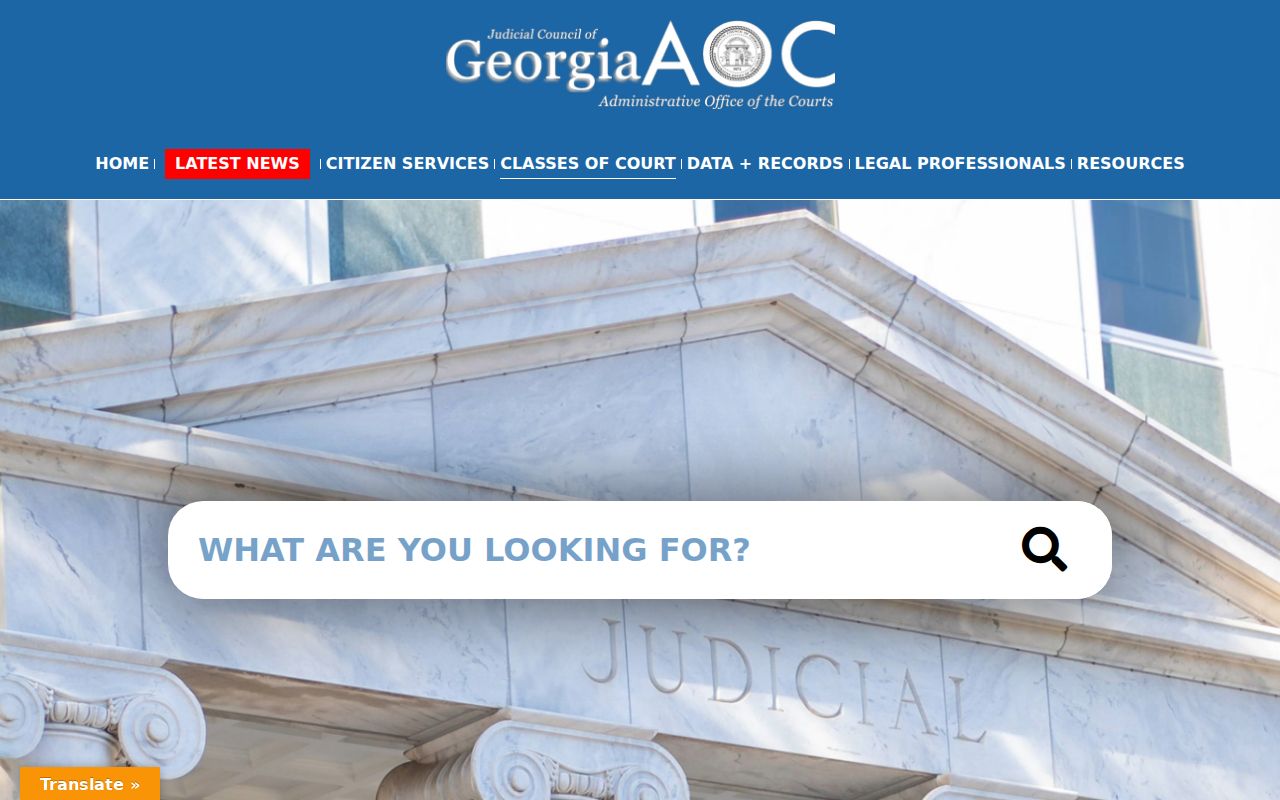
Magistrate, Probate, Juvenile, and municipal offices maintain their own subject files. Federal cases use a separate federal system.
Types of Court Records
A court file differs from the clerk’s land and commercial record indexes. The same Superior/State office also records real-estate transactions, UCC-1 filings, trade names, judgment liens, notary commissions, and passport applications. Choose the category before requesting a copy.
- Superior and State case files, docket entries, orders, and judgments
- Magistrate civil, garnishment, dispossessory, warrant, and related files
- Probate estate, guardianship, marriage, and historical records
- Juvenile records subject to special access limits
- Land, lien, UCC, and trade-name records kept in separate clerk indexes
FANS Is Not a Court Docket
GSCCCA FANS is a voluntary Filing Activity Notification System. It sends forward-looking notices based on clerk index data for certain real-estate and personal-property filings. It is not comprehensive and is not a Superior or State criminal or civil case search.
The captured service page illustrates that distinction:
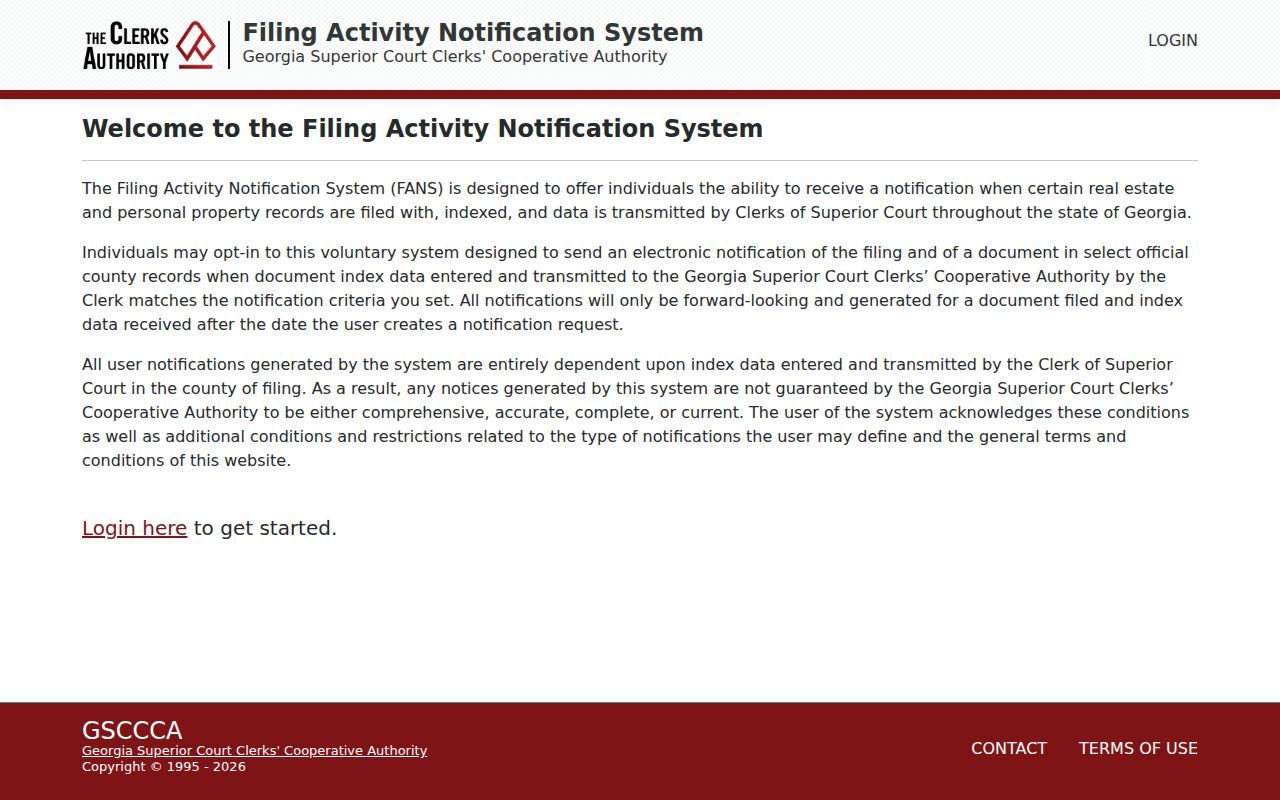
Use FANS for its stated notification role, not as proof that a court case exists or does not exist.
What a Court Record Contains
Georgia Uniform Superior Court Rule 39.2 gives a useful civil docket inventory: action number, cause, attorneys, parties, filing date, costs, service, disposition, verdict or judgment, trial date, jury status, judge, Fi.Fa. issuance, and record cross-references. An online provider may show less.
| Case Number | The court’s action identifier. |
|---|---|
| Pleadings | Complaints, answers, motions, and responses. |
| Orders & Judgments | Signed court rulings if public. |
| Docket Sheet | The chronology of filings and events. |
| Exhibits | Attachments subject to filing and access rules. |
Sumter eCertification Workflow
The GSCCCA eCertification portal offers a digital route: check county participation, register for a universal account, sign in, request the supported document, then use the authentication code lookup to verify an issued certificate. This is distinct from a plain PeachCourt image.
An ordinary copy conveys the file content. A certified copy carries the custodian’s authentication for a use that requires it. Ask the receiving agency which form it needs before paying.
Certified Copies and Fees
The county clerk FAQ lists ordinary copies at $1 per page. Certified copies are $2.50 for the first page and $0.50 for each added page. Fax copies are $2.50 for the first page and $1 per added page. These are posted amounts, not a promise they remain unchanged.
| Item | Amount |
|---|---|
| Ordinary copy | $1 per page |
| Certified first page | $2.50 |
| Each added certified page | $0.50 |
| Faxed first / added page | $2.50 / $1 |
Clerk of Superior / State Court
500 West Lamar Street
Americus, GA 31709
229-928-4537
Federal Records for Sumter Cases
Federal cases affecting Sumter County are not in PeachCourt. They route through the Albany Division of the U.S. District Court for the Middle District of Georgia and PACER.
The federal PACER source is shown here:
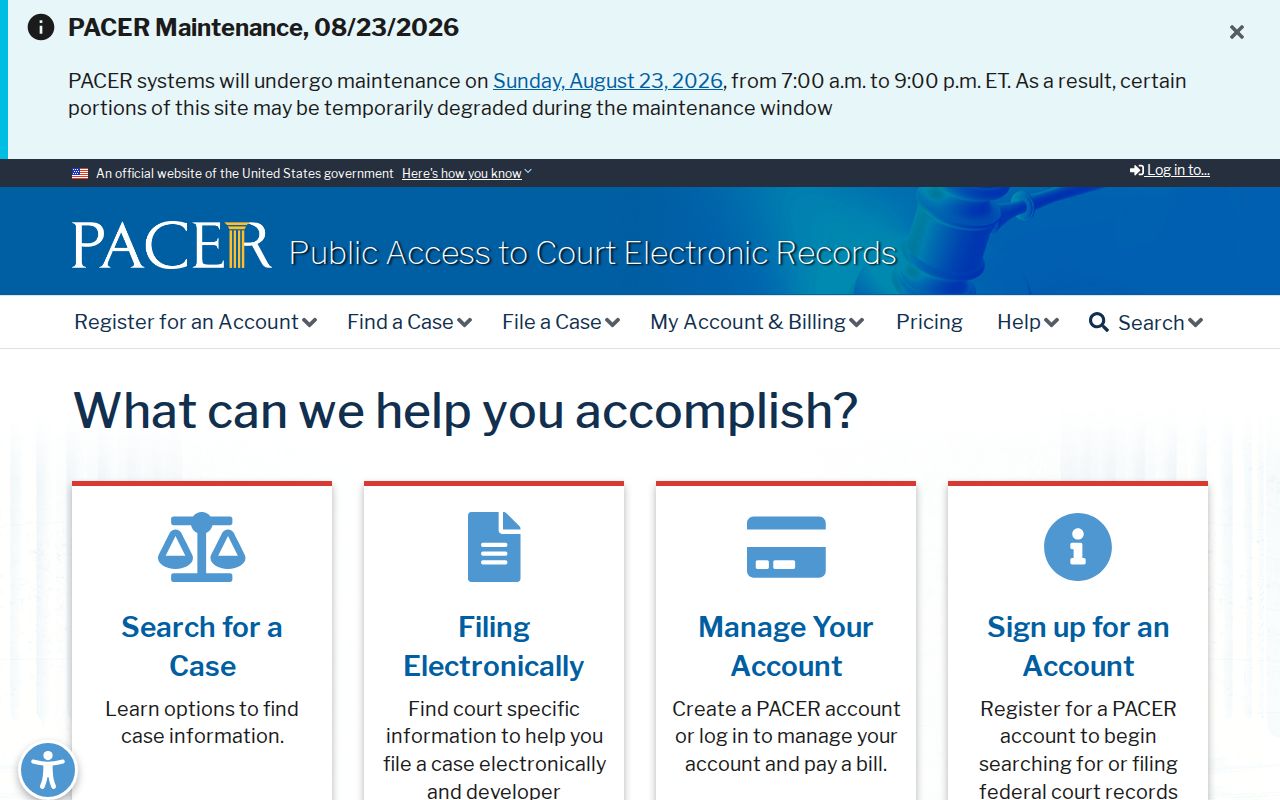
PACER’s Case Locator can search federal matters, while a district search can use case number, party, and filing details.
The Albany Division office serves Sumter County:
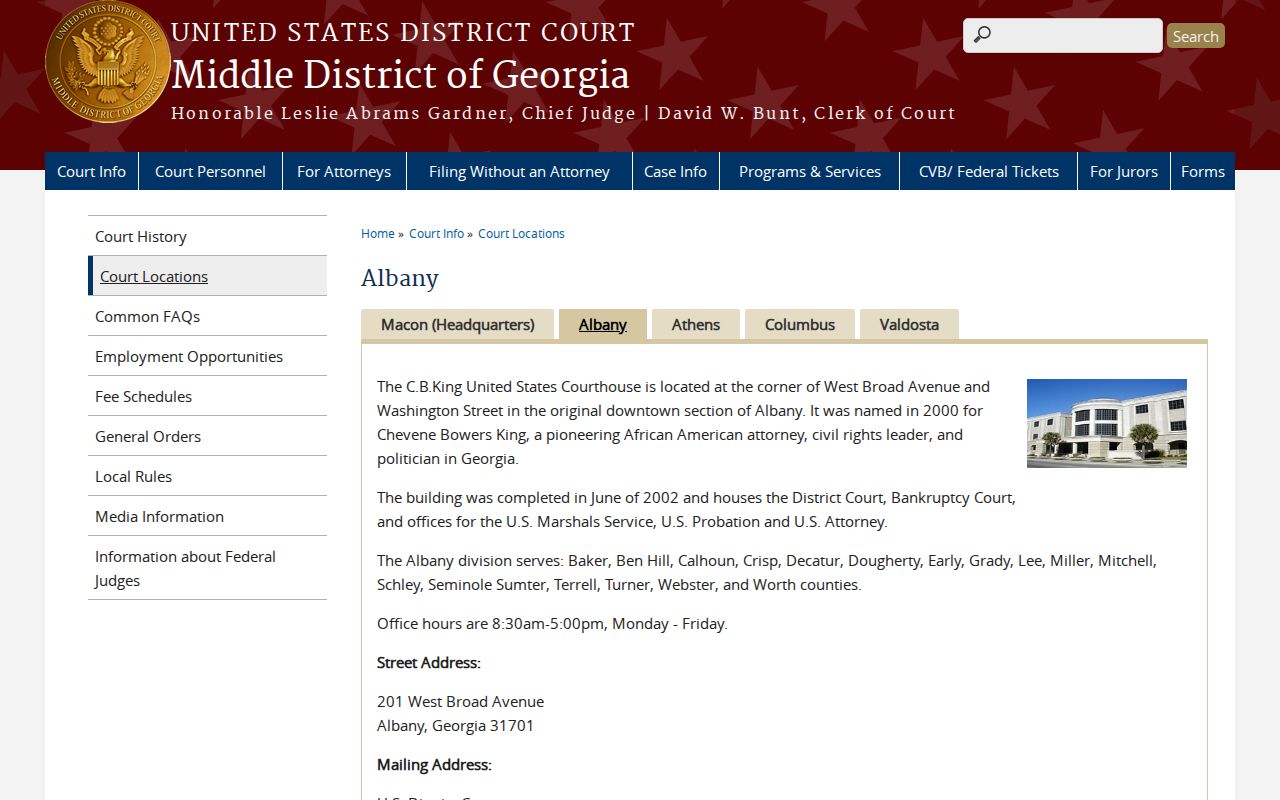
Its C.B. King U.S. Courthouse is at 201 West Broad Avenue, Albany, with phone 229-430-8432.
Federal Copy Costs and CM/ECF
PACER pricing currently describes $0.10 per page, a $3 cap for most documents, $2.40 audio files, and a quarterly waiver at or below its stated threshold.
The pricing page captured for this project:
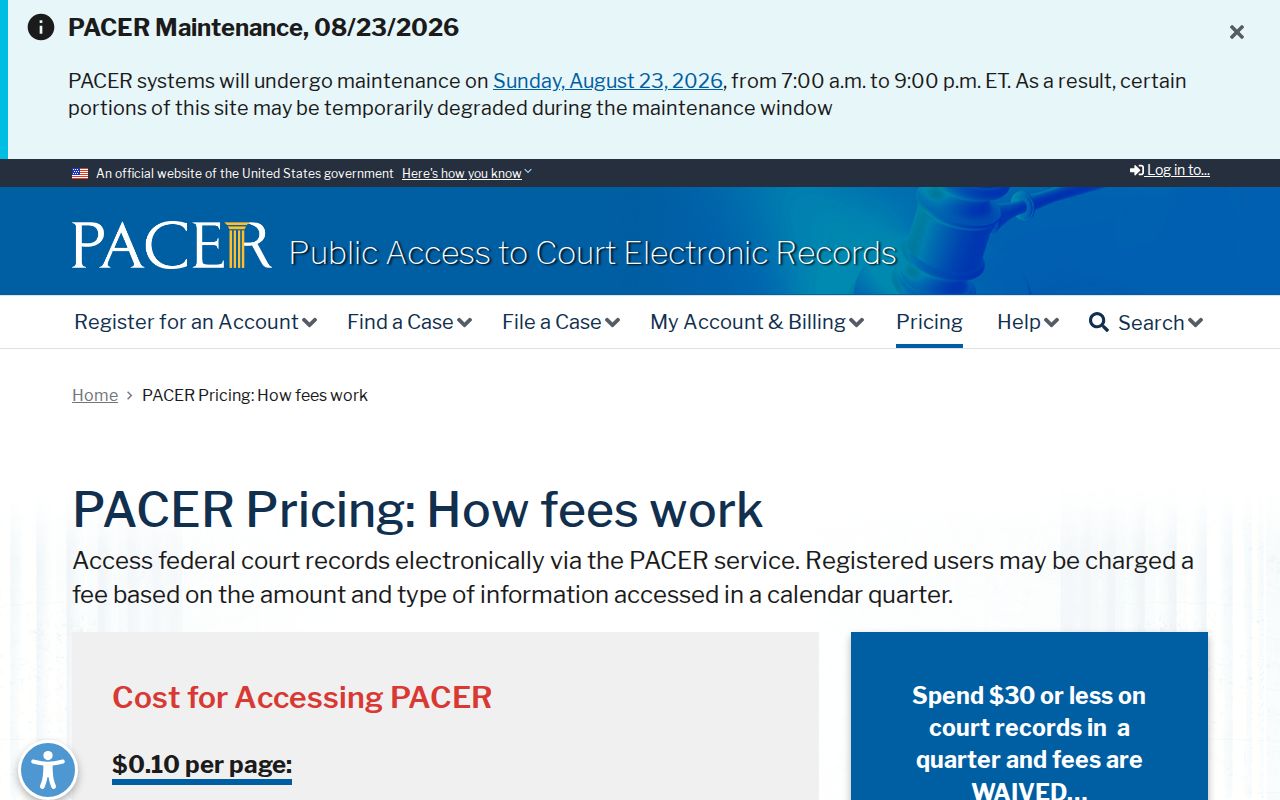
A June 2026 notice schedules $0.12 per page and a $40 quarterly threshold for January 1, 2027, so verify current terms.
CM/ECF information is a separate federal filing-system source:
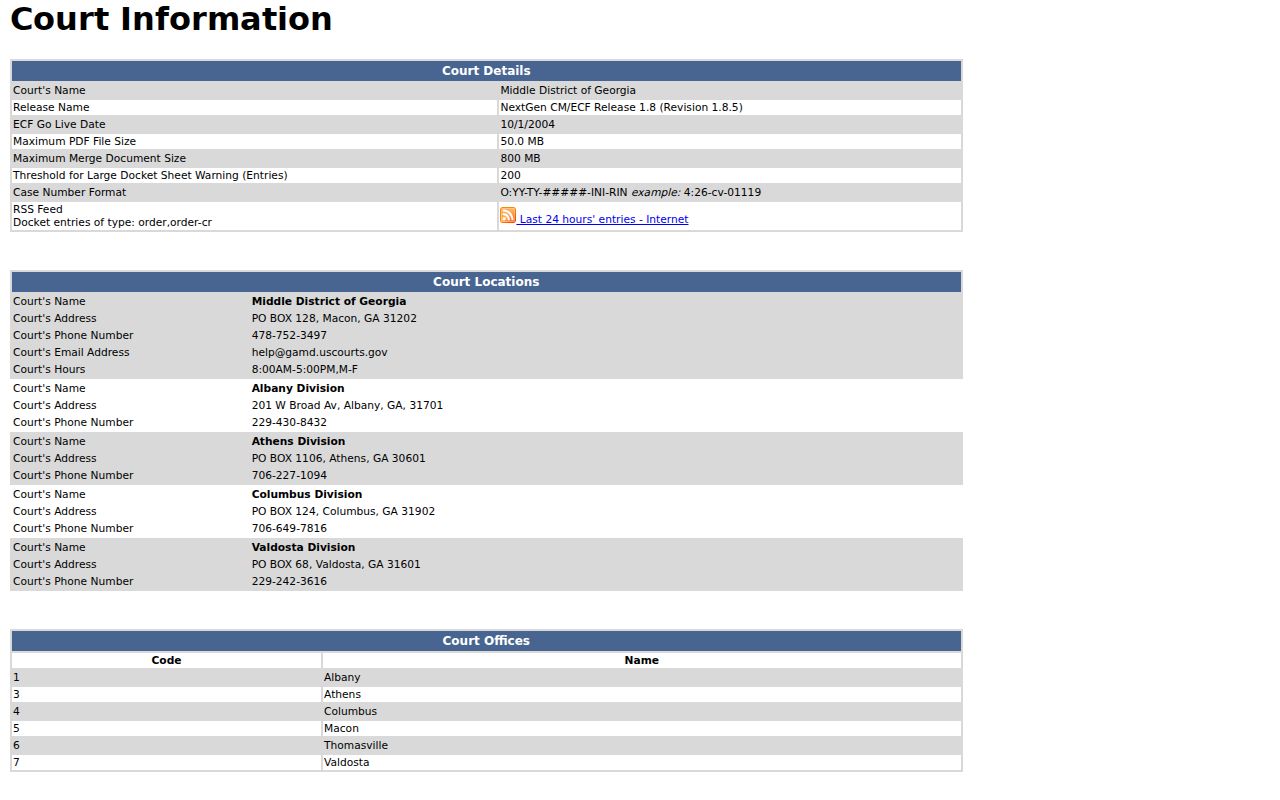
CM/ECF filing access and PACER public access should not be confused with Georgia state-court records.
Public Access and Sealed Records
Georgia Uniform Superior Court Rule 21 begins with a public-access presumption and permits restriction when the required legal findings are made. Rule 36.17 limits protected identifiers in filings. Juvenile law also keeps specified records separate and nonpublic except under statutory exceptions.
Under the Georgia Open Records Act guidance, a narrow request should name the custodian, record, date range, and preferred format. The general framework includes a three-business-day response or timing notice, reasonable charges, and a cited basis for withholding. Court-file copies should go to the court clerk first.
Key Rules:
Uniform Superior Court Rule 21 sets the public-access presumption and standards for limiting access.
Georgia Open Government FAQ explains response timing, costs, and exemption notices.
Juvenile, sealed, adoption, and protected-identifier material may require a separate lawful access analysis.